DOING Holdings
DOING Holdings
Mombasa, Kenya — September 2026. DOING ECO has signed the contract of a complete tire-to-diesel production line to a new waste tire recycling project in the East African port city, with a target annual processing capacity of over 10,000 tons.
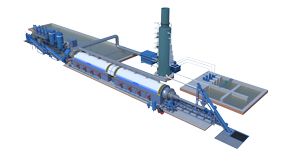
The order comprises two 15TPD waste tire pyrolysis units and one 15TPD pyrolysis oil refining system, forming an integrated chain that converts waste tires directly into diesel fuel.
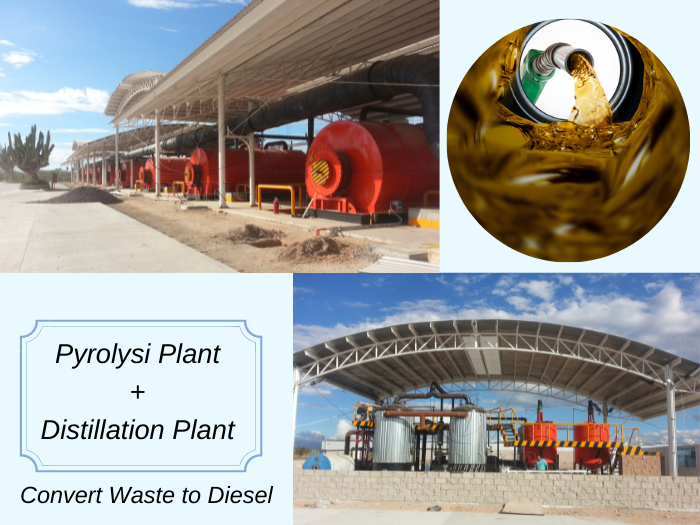 Waste tyre to diesel production line
The Kenya client is a new investor who identified waste tire pyrolysis as a high-potential entry point into East Africa's recycling industry. Several factors shaped the decision:
Abundant feedstock supply. The region generates a significant and growing volume of end-of-life tires each year, driven by expanding transport and logistics activity. Much of this volume currently ends up in uncontrolled dumpsites or informal disposal, with limited local processing capacity.
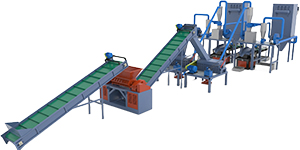
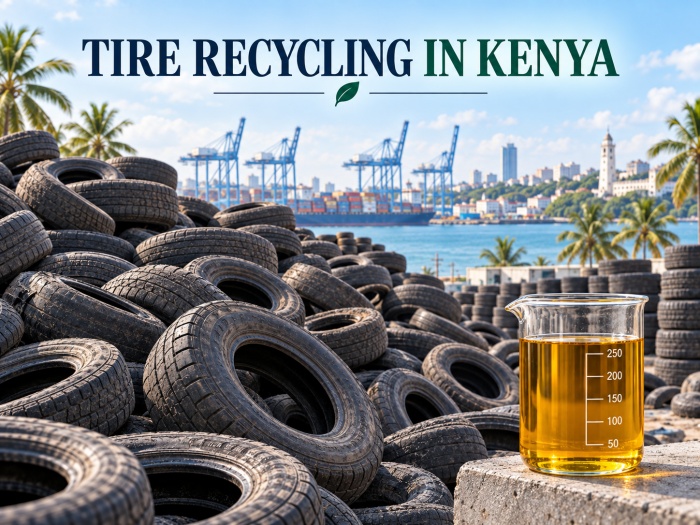 Waste tyre recycling in Kenya
Rising domestic fuel demand. Demand for diesel — used extensively in generators, transport, agriculture and construction, continues to climb across the region. Local fuel prices remain sensitive to import fluctuations, creating a strong economic case for domestically produced fuel alternatives.
Favorable location and policy direction. Kenya and neighbouring markets have been encouraging waste-to-energy and circular economy initiatives, and a port-city position offers logistical advantages for both feedstock collection and product distribution across East Africa.
The project is designed from the ground up as a commercial-scale operation, not a pilot. The decision to pair a 30TPD pyrolysis front end with a dedicated refining line reflects a clear intent to produce a marketable fuel product rather than raw pyrolysis oil.
The tire to diesel production line delivered to Kenya consists of three core units working as an integrated system:
| Equipment Configuration | Specification | Function |
|---|---|---|
| Waste Tire Pyrolysis Unit x 2 | 15TPD each (30TPD combined) | Converts shredded waste tires into pyrolysis oil, carbon black, and steel wire through oxygen-free thermal decomposition. |
| Pyrolysis Oil Refining Unit x 1 | 15TPD | Distills and refines raw pyrolysis oil into diesel-grade fuel through catalytic cracking and fractional distillation. |
The two pyrolysis units convert waste tire into TPO tire pyrolysis oil, and then feed raw pyrolysis oil into the single waste oil refining unit, creating a workflow: waste tires enter the front end, and non-standard diesel fuel exits the back end. This configuration lets the client capture the full value chain within a single facility, from low-cost waste feedstock to a higher-value refined fuel product.
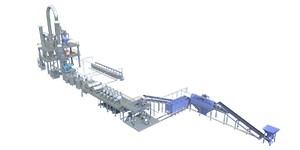
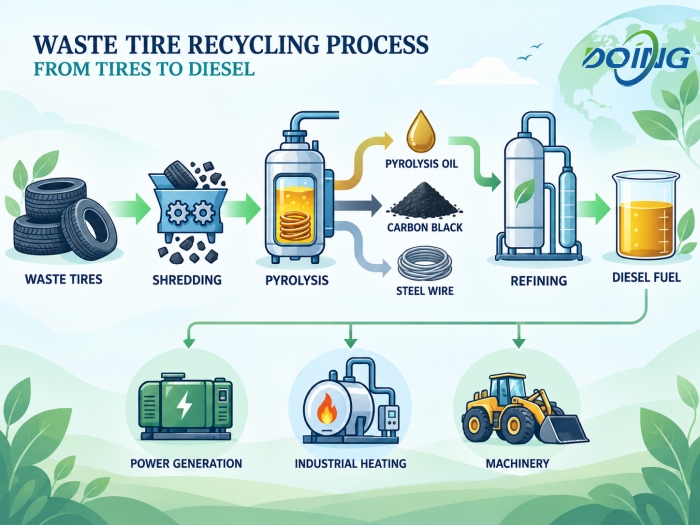 Waste tyre to diesel production plant working process flow
One of the Kenya client's primary concerns during the consultation phase was whether the fuel produced from waste tires could actually be used in diesel generators; a critical question, given that backup and off-grid power generation represents a major diesel consumption segment across East Africa.
Raw pyrolysis oil, while combustible, has limitations that prevent direct use in most diesel engines and generators:
Its flash point, viscosity and sulfur content do not meet the specifications required by standard diesel generator sets.
Direct combustion of unrefined pyrolysis oil can cause injector fouling, accelerated wear and higher emissions — issues that shorten generator lifespan and raise maintenance costs.
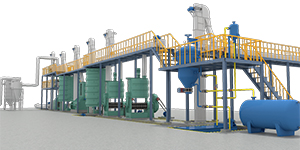
This is precisely why the client chose to include a dedicated refining system in the order. The 15TPD waste oil refining unit processes raw pyrolysis oil through catalytic distillation, removing impurities and adjusting the fuel's properties to produce a diesel-grade product. The refined non-standard diesel output can be used in:
Diesel generator sets matching the fuel's specifications (the client's primary intended application)
Industrial heating systems such as boilers and furnaces
Construction and agricultural machinery operating on diesel
Local fuel resale to nearby oil refining businesses and transport operators
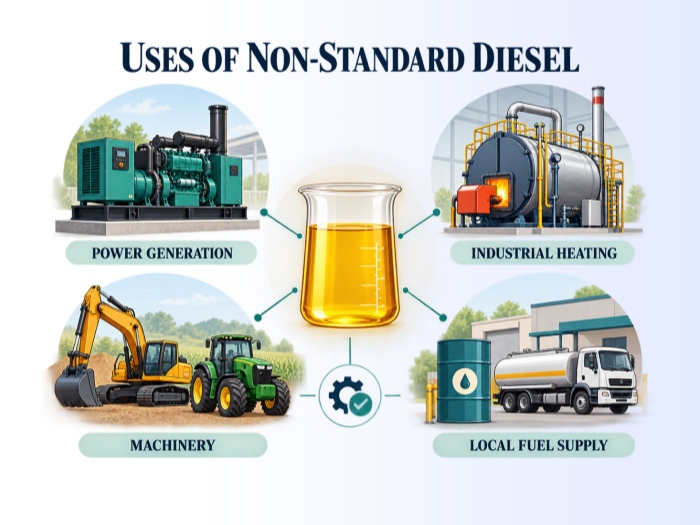 Applications of non-standard diesel extracted from waste tyres
By adding the refining step, the client transforms pyrolysis oil; typically valued at a fraction of refined diesel; into a product that can compete directly with commercially available diesel in the local market.
The tyre to diesel equipment ordered by Kenya custom is under fabrication and is scheduled for shipment and on-site installation and commissioning by DOING ECO's overseas engineering team. The facility is expected to begin processing waste tires into diesel fuel upon completion of the commissioning phase.
DOING ECO provides complete waste tire pyrolysis-to-diesel production lines for investors across Africa and other emerging markets; including Nigeria (where the company operates a registered subsidiary with resident engineers), Ghana (multiple waste tire pyrolysis and refining lines, with refined fuel running generator sets on site), Burkina Faso, Mali and Ethiopia; alongside projects in North Africa's Egypt and Southern Africa's South Africa.
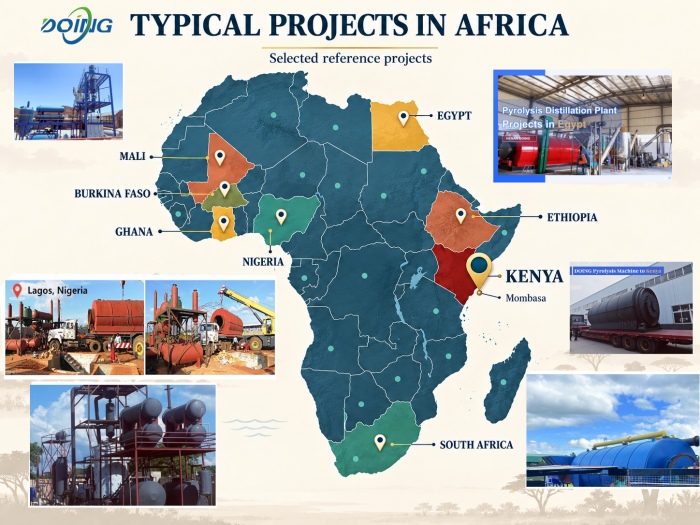 DOING ECO pyrolysis refining project installation records in Africa
If you are evaluating a similar waste pyrolysis refining to diesel project; whether for power generation fuel, industrial heating or fuel resale; share your requirements for a free technical assessment and customized configuration proposal.